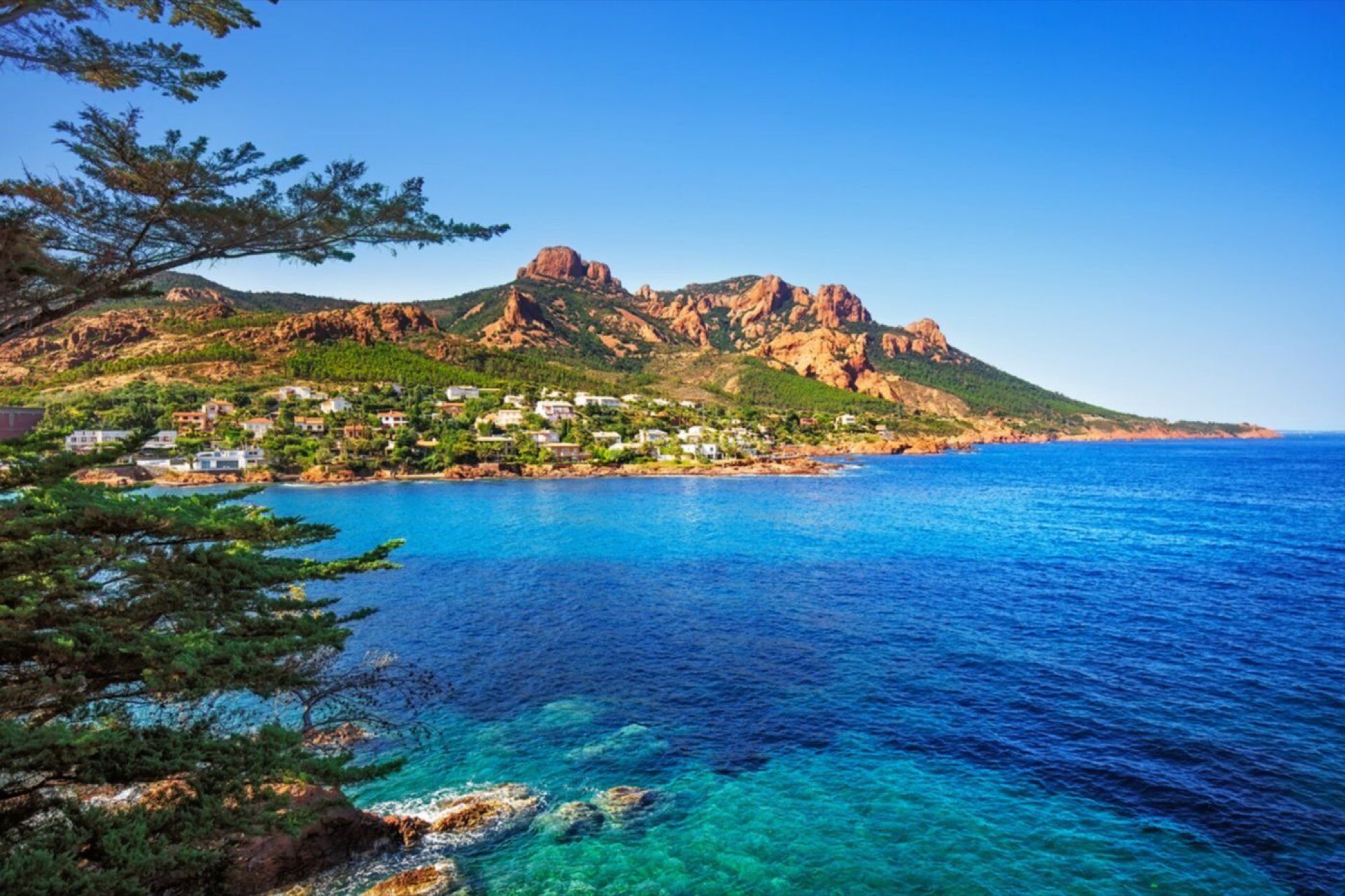
Corniche d'Or: Driving the Esterel Coast Road
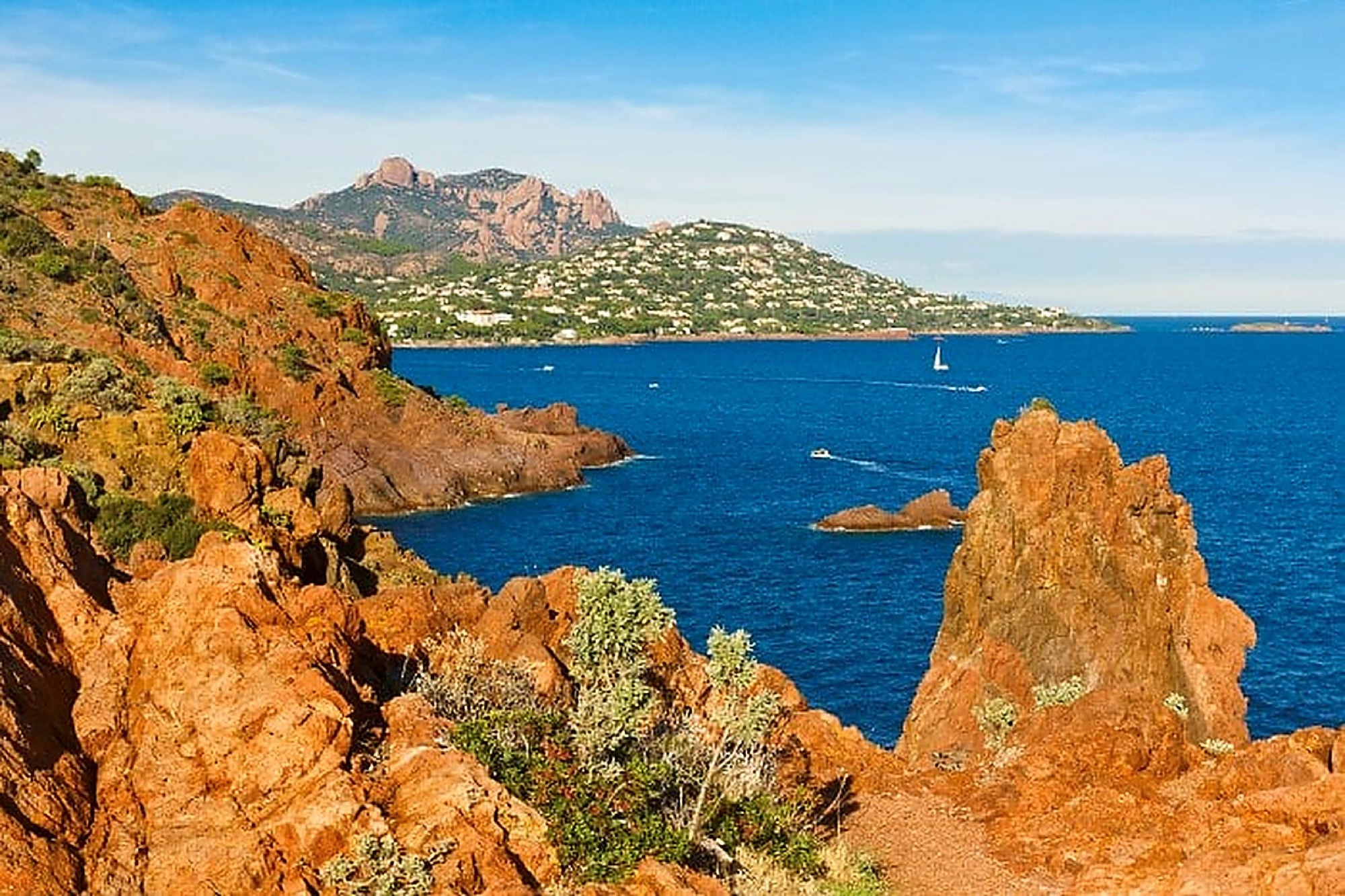
The Corniche d'Or is the coast road that hugs the Esterel Massif between Saint-Raphaël and Théoule-sur-Mer, then on to La Napoule. Opened in 1903 at the initiative of the Touring Club de France, it strings together red cliffs, coves and viewpoints. The most beautiful stretch runs between Agay and Le Trayas; allow half a day with stops.
Some roads you take to get somewhere; others you take for their own sake. The Corniche d'Or is firmly in the second category. Between the red rock and the blue of the Mediterranean, every bend reveals a new view. Here's its story and the stops you shouldn't miss, from east to west, starting in Théoule.
A road born of tourism
At the turn of the 20th century, the Esterel coastline was still hard to reach by road. In 1900, the Touring Club de France, an association founded in 1890 by cycling enthusiasts, announced plans for a scenic road linking Toulon to Genoa. The Esterel section was launched under the leadership of its president, Abel Ballif.
Construction ran from 1901 to 1903, overseen by the engineers Perier and Imbert. Funding came from the Var and Alpes-Maritimes departments, the local towns, the Touring Club and private subscriptions. The road was opened on April 11, 1903. Its nickname, the "Golden Corniche", is said to come from the golden glow the rocks take on in the sun.
The route at a glance
Today the Corniche d'Or is the D559 on the Var side and the D6098 on the Alpes-Maritimes side. Depending on the source, it's around 30 kilometers from Saint-Raphaël to Théoule-sur-Mer, and about 45 km if you carry on to La Napoule . The road runs through or past Boulouris, Le Dramont, Agay, Anthéor, Le Trayas, Miramar, La Galère and Théoule.
The most spectacular section, about 13 km long, links Agay to Le Trayas: here the road is carved into the cliffside, above coves of turquoise water.
Stops not to miss, from Théoule to Saint-Raphaël
Théoule-sur-Mer and Pointe de l'Aiguille
The ideal starting point on the eastern end. Park or get off the train in the village, then walk to Pointe de l'Aiguille (about 800 m from the tourist office) for your first view of the red cliffs. Our guide to things to do in Théoule-sur-Mer covers the village's beaches and walks.
Miramar and Pointe de l'Esquillon
After La Galère and Miramar, look out for the Col de l'Esquillon: from there, a short footpath leads to Pointe de l'Esquillon, one of the finest viewpoints on the corniche, high above the sea.
Le Trayas
The hamlet of Le Trayas, perched above the water, marks the border into the Var. Its viewpoint gives you a bird's-eye view over the coves and red rocks.
Anthéor and Cap Roux
Between Le Trayas and Anthéor, pull-outs let you admire the red rocks of Saint-Barthélemy and Cap Roux. Hikers will recognize the Pic du Cap Roux above, one of the massif's signature peaks.
Agay and the Rastel
The sheltered, almost circular bay of Agay is overlooked by the Rastel d'Agay (287 m). It's a good place to stop for lunch and a swim.
Le Dramont and Pointe de l'Observatoire
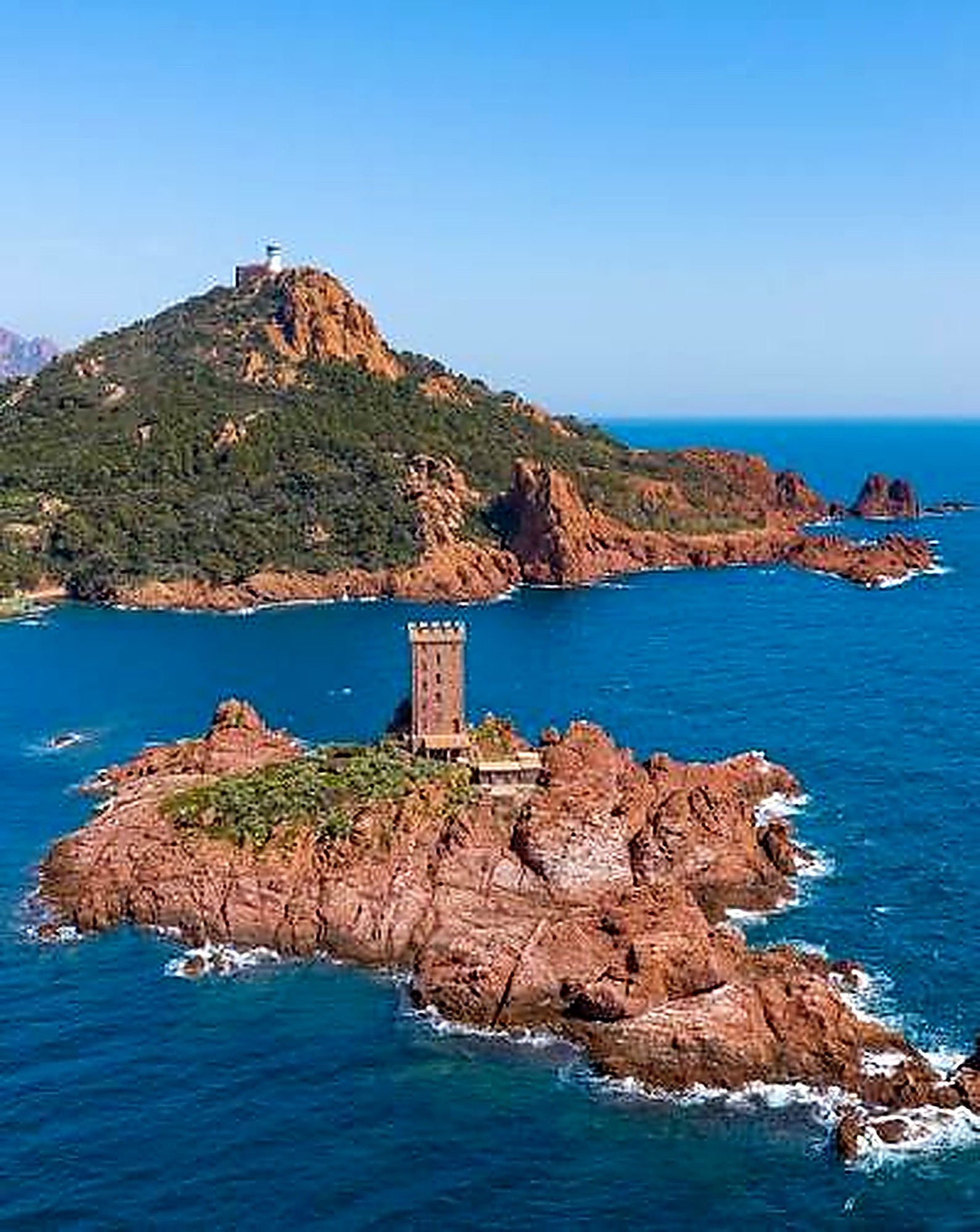
Before Saint-Raphaël, Pointe de l'Observatoire is the first in a series of viewpoints, with an old blockhouse turned into a lookout. Right next door, Cap Dramont faces the Île d'Or and its tower.
Doing the corniche without a car
The railway follows much of the coastline. Regional TER trains on the Cannes – Saint-Raphaël line stop at Théoule-sur-Mer and Le Trayas, among others . A day-trip idea: take the train to Le Trayas, walk a section, then return by train or bus.
On the Alpes-Maritimes side, bus line 22 links Cannes, Théoule and Le Trayas, and Théoule's free shuttle runs along the coast as far as La Figueirette .
By bike, the corniche is a local cycling classic, but traffic is heavy in season and the road is often narrow. Lights and a high-visibility vest are essential, especially on blind bends.
Practical tips
- When to go: early morning or late in the day, for the light on the red rock and to avoid the traffic. Summer weekends and public holidays are very busy.
- Which direction: driving east to west, you're on the mountain side; west to east, you're on the sea side, which makes it easier to pull into the parking areas.
- Parking: only use the designated areas. Never park in front of the gates to forest tracks, which are reserved for emergency services.
- How long: allow half a day with three or four stops and a swim.
Our partners in Théoule-sur-Mer
Frequently asked questions
Who built the Corniche d'Or?
It was built between 1901 and 1903 at the initiative of the Touring Club de France and its president Abel Ballif, funded by the departments, the local towns and private donors.
Where does the Corniche d'Or start?
It's usually considered to start in Saint-Raphaël and end in Théoule-sur-Mer or La Napoule. The most spectacular stretch is between Agay and Le Trayas.
Can you do the Corniche d'Or by train?
Partly: the railway follows the coast, and several stations, including Théoule-sur-Mer and Le Trayas, let you combine the train with walking.
How long does it take to drive the Corniche d'Or?
Without stopping, under an hour by car outside of traffic jams . With the viewpoints and a swim, plan on half a day.
Kayaking with Azurkay
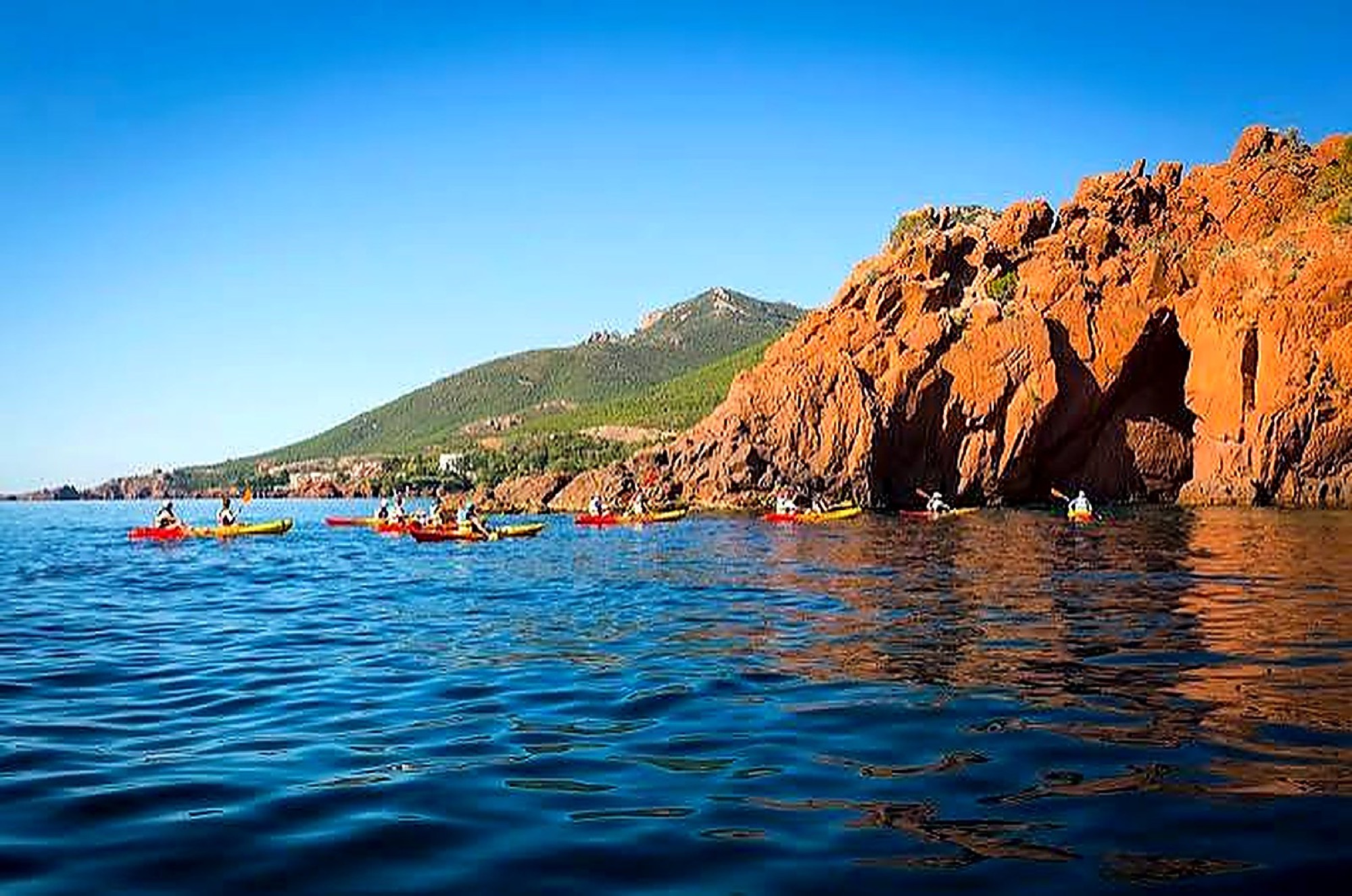
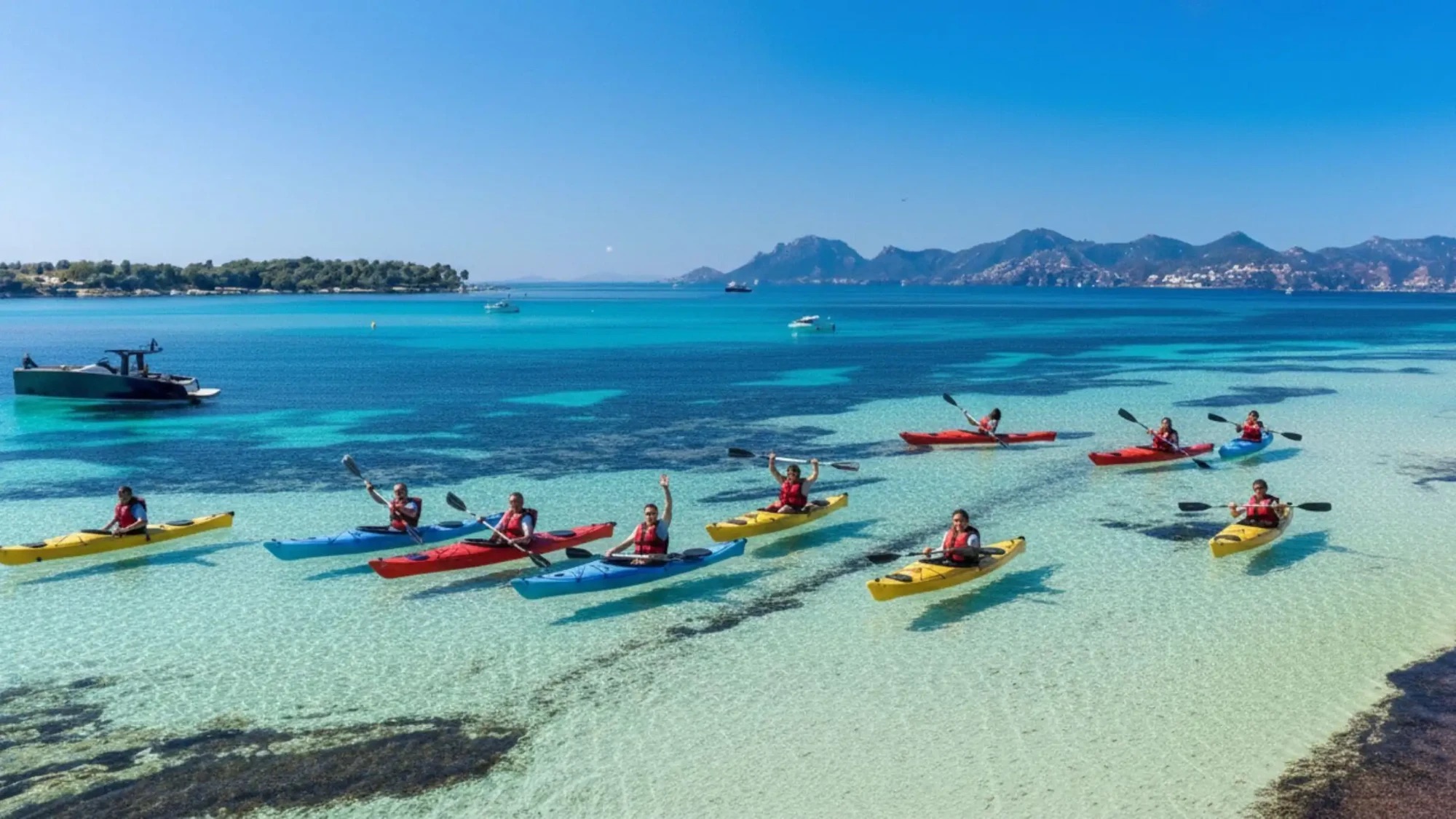
The Corniche d'Or shows you the Esterel from above; a kayak shows it from below, at the foot of the cliffs the road looks down on. Our guided tour of the Esterel Massif departs from Théoule-sur-Mer for four hours along the red rocks, in a group of 16 people max with state-certified instructors. To plan your trip, also read our article on kayaking in the Esterel.