Villefranche Citadel & Cocteau Chapel: What to See
In Villefranche-sur-Mer, the Citadelle Saint-Elme (1557) is free to wander: courtyards, ramparts, gardens and views over the bay, although its museums are currently closed for renovation. On Quai Courbet, the Chapelle Saint-Pierre, decorated from floor to ceiling by Jean Cocteau in 1956–1957, opens on certain days for a small admission fee .
These two landmarks sum up Villefranche: on one side, the fortress that guarded the bay for centuries; on the other, a tiny fishermen's chapel turned into a total work of art. They're just five minutes' walk apart, so you can easily see both in a single morning.
The Citadelle Saint-Elme: a fortress on the water's edge
The citadel was built in 1557 on the orders of Duke Emmanuel Philibert of Savoy, to plans by Gian Maria Olgiatti. Its job was to protect the bay, a strategic anchorage, after the coastline had been ravaged during the war of 1543. It became a barracks after the County of Nice was annexed to France in 1860, was later bought by the town and turned into a cultural venue in 1981. It has been a listed historic monument since 1968.
What you can see today
- The courtyards and curtain walls: you're free to roam between the massive walls, with lovely glimpses of the bay and Cap Ferrat.
- The gardens and open-air theater, which host events during the season.
- The town hall, housed within the walls: the citadel is a living place, not just a backdrop.
Address: place Emmanuel-Philibert, 06230 Villefranche-sur-Mer. The outdoor areas are free to enter. The tourist office says it's open year-round, apart from occasional public holidays, but exact hours vary from source to source .
The citadel museums: what to know before you go
The citadel houses several municipal collections grouped together as the Musée de la Citadelle:
- the Fondation Musée Volti, dedicated to the sculptor Antoniucci Volti, with more than 180 works (bronzes, hammered copper, plaster, terracotta and drawings);
- the Goetz-Boumeester collection, around 60 works by the artist couple Henri Goetz and Christine Boumeester, plus some fifty pieces from their personal collection, including works by Picasso, Miró, Hartung and Picabia;
- local history collections: military heritage of the 27th Alpine Chasseurs Battalion, works by Jean Cocteau, and late-19th-century Russian paintings.
Important: the museum galleries are currently closed for renovation, and the collections are undergoing a major restoration project. Announced reopening dates differ depending on the source . Temporary exhibitions may still be scheduled, so check before making a special trip for the museums.
The Chapelle Saint-Pierre, decorated by Jean Cocteau
On Quai Courbet, facing the Port de la Santé, this little fishermen's chapel has lived several lives. Originally a place of worship, after a fire it was used to store fishing nets and as the seat of the prud'homie, the fishermen's tribunal. Jean Cocteau, a regular in the area thanks to his patron Francine Weisweiller, who lived in Saint-Jean-Cap-Ferrat, won the fishermen's agreement to decorate it. He worked on it in 1956–1957, inside and out. The chapel has been a listed historic monument since 1996.
What you'll discover inside
- Scenes from the life of Saint Peter, patron saint of fishermen, in Cocteau's unmistakable line.
- The "Candlesticks of the Apocalypse", fired in the kilns of a brickworks in Valbonne.
- In the narthex, local scenes dedicated to the Saintes-Maries-de-la-Mer and the young women of Villefranche.
The interior is small: allow 20 to 30 minutes to take in the frescoes and, if offered, listen to the explanations given on site.
Practical info
Address: 4 quai Courbet, 06230 Villefranche-sur-Mer. According to the tourist office, the chapel is open Wednesday to Sunday, mornings and afternoons, with an annual closure from mid-November to mid-December; other official listings give more limited opening days . A full-price ticket costs a few euros, and it's free for under-15s . Payment is listed as cash or check only, so bring some change.
How to combine the two visits
The most logical route is to start with the chapel on the quay, then climb up to the citadel through the lanes, passing along the Rue Obscure. Then carry on along the chemin de ronde, the walkway at the foot of the ramparts, to the Port de la Darse: an easy stroll, shaded in places.
Best times: early morning, for cooler temperatures and lovely light on the bay, or late afternoon. If you can, avoid days when several cruise ships are anchored in the bay and the quay gets busier. For a full day's itinerary, see our guide to things to do in Villefranche-sur-Mer.
Our partners in Villefranche-sur-Mer
Frequently asked questions
Is the Villefranche citadel free?
Yes, the courtyards, ramparts and gardens are free to visit. The museums are free too, but were closed for renovation at the time of writing.
Are the Volti and Goetz-Boumeester museums open?
No, the galleries are closed while the building is renovated and the collections restored. To our knowledge, no reopening date has been officially confirmed, so call the citadel or the town hall before you go.
How long does it take to visit the Cocteau chapel?
About 20 to 30 minutes. Combined with the citadel and the old town, allow a comfortable half-day.
Can you walk there from Nice?
Yes, via the coastal path around Cap de Nice (about 6 km, allow 2 hours), which ends at the Port de la Darse, right below the citadel. Otherwise, the train from Nice takes just a few minutes.
Kayaking with Azurkay
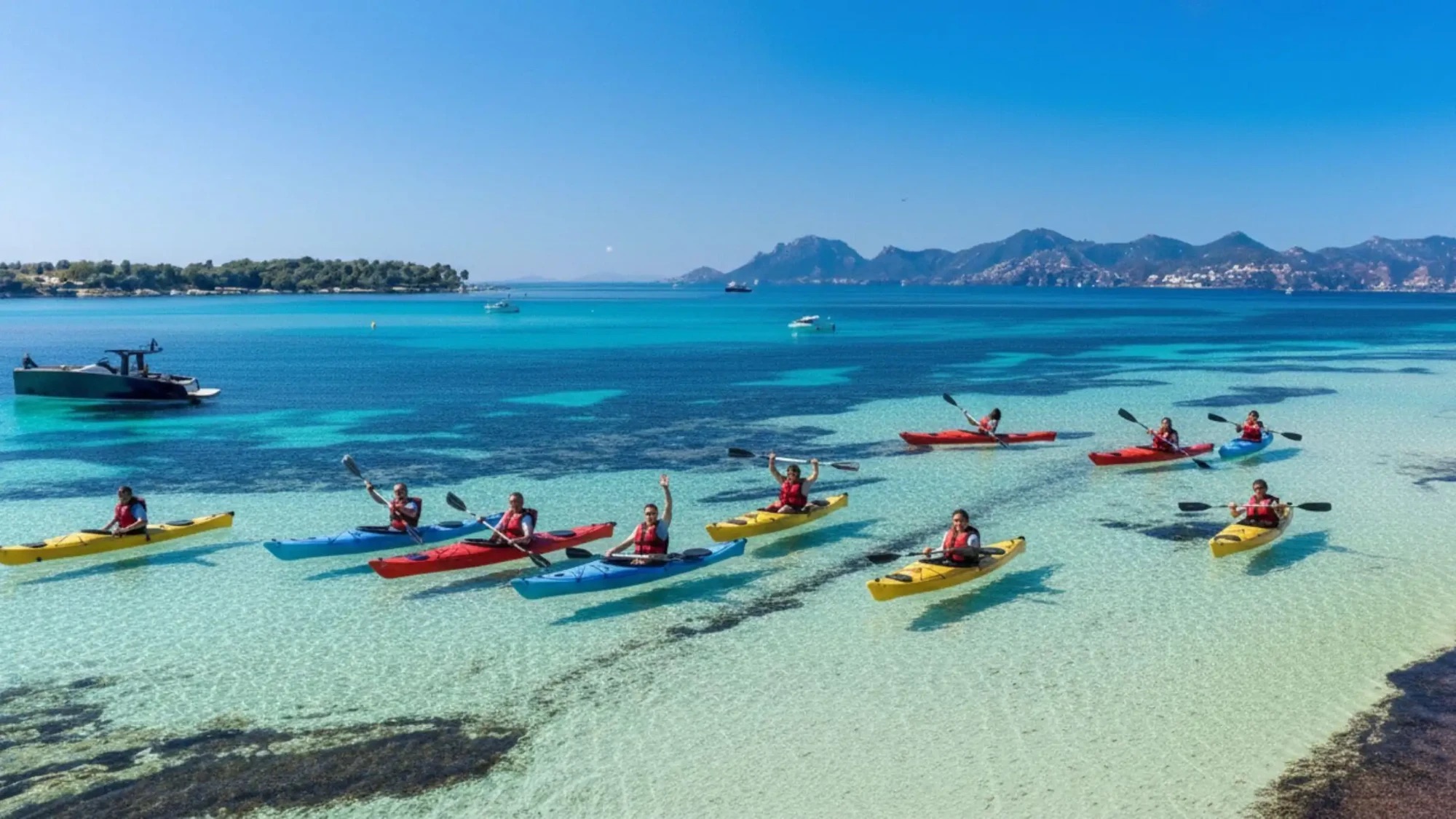
Cocteau loved this coastline seen from the sea, and you'll understand why once you're on the water. Our guided kayak tour from neighboring Beaulieu-sur-Mer follows the shoreline of Beaulieu and Cap Ferrat in a small group, led by state-certified instructors. It's the perfect follow-up to a cultural morning: see the Beaulieu-sur-Mer kayak tour.